So You Want to Go to Med School? Here's What Actually Happens in Pre-Med
I remember sitting in my college advisor's office freshman year, confidently announcing I was pre-med. She looked at me with this knowing smile and said, "Great. Do you know what that actually means?" Honestly, I didn't. Like most high schoolers who want to become doctors, I thought pre-med was a major you declared, showed up to class, and boom—medical school.
Turns out, it's way more complicated than that. And way more flexible than you'd think.
Pre-med isn't something you major in. It's a track—a commitment to knock out specific science courses, rack up clinical hours, ace the MCAT, and prove you're not just smart, but genuinely cut out for medicine. You can major in literally anything. I've met pre-meds who studied philosophy, music composition, even one guy who majored in medieval history. What matters is that you complete the requirements and show medical schools you can handle the workload.
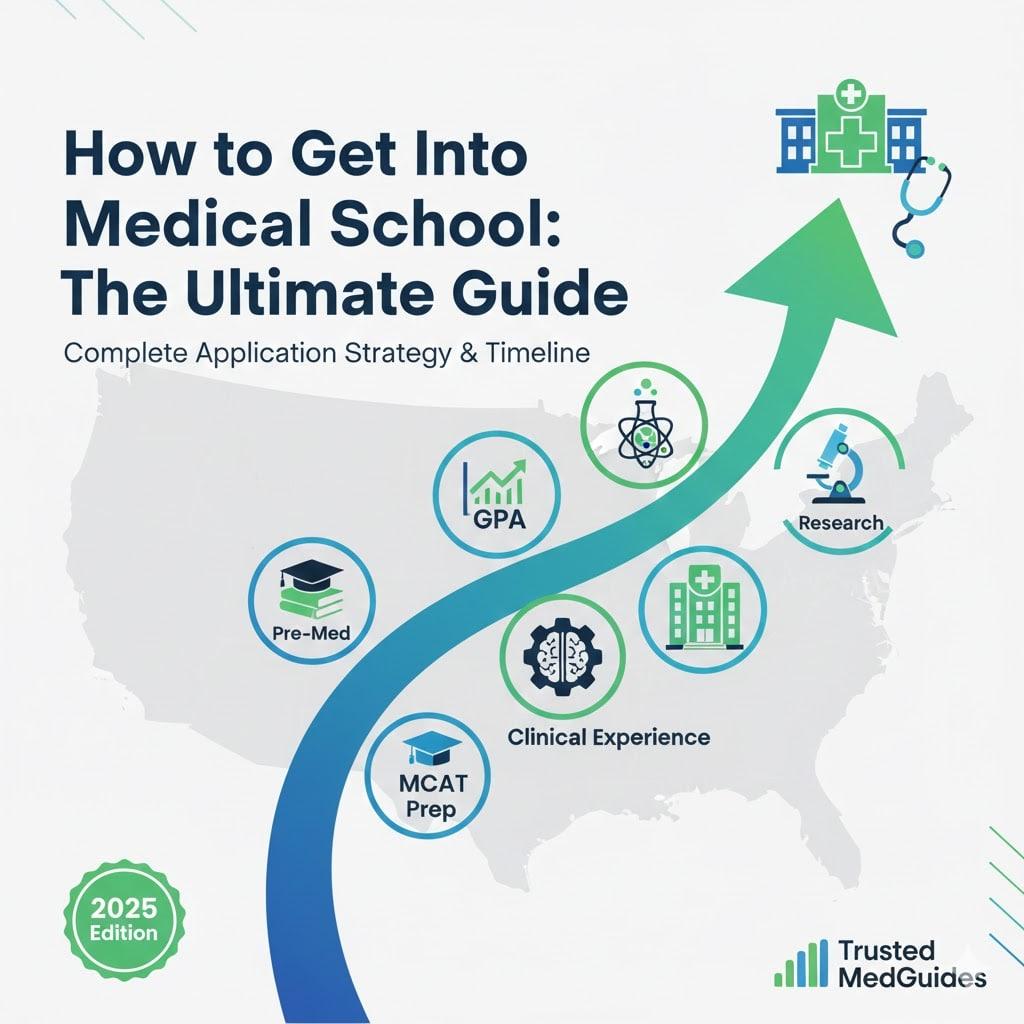
If you want a complete year-by-year plan, read this full roadmap: The Ultimate Pre-Med Roadmap (High School to Med School Acceptance).Here's what nobody tells you upfront: most students mess up the timeline, underestimate how brutal organic chemistry actually is, or burn out from trying to do everything at once. This isn't a step-by-step instruction manual. It's more like a realistic breakdown of what you're signing up for, what trips people up, and how to avoid the common mistakes I've watched dozens of students make.
Before College: Yeah, High School Actually Matters
You'd think your pre-med journey starts in college, right? Not really. What you do in high school sets the tone.
Take the hard science classes. AP Biology, AP Chemistry, AP Physics—these aren't just résumé boosters. They're your foundation. When you hit General Chemistry or intro bio in college, you'll be grateful you've seen the material before. College professors assume you remember this stuff. They're not re-teaching the periodic table.
And take calculus if your school offers it. A lot of pre-med courses assume you understand basic calc. Plus, many medical schools require at least one semester of it, and going in cold as a college freshman is rough.
Start volunteering early. Hospitals, nursing homes, free clinics—anywhere you're interacting with patients or healthcare workers. Medical schools don't just want to see that you volunteer; they want to see sustained involvement. Showing up for 10 hours one summer doesn't cut it. They're looking for the student who volunteered every Saturday morning for two years. Start building that narrative now. (Internal link: "Best volunteering opportunities for pre-med students")
Shadow a doctor if you can. This is harder in high school than college, but if you have a family friend who's a physician, ask to follow them for a day. Even a few hours gives you a glimpse of what the job actually involves—the mundane parts, not just the dramatic ER scenes from TV.
Choosing the Right College (And No, It Doesn't Have to Be Harvard)
This is where students and parents spiral. "Do I need to go to an Ivy League school to get into med school?"
Short answer: No.
Long answer: Your undergrad institution matters way less than what you do there. A student with a 3.9 GPA, strong MCAT, and solid clinical experience from a state school will beat out an Ivy League student with a 3.4 and weak extracurriculars every time.
That said, some things do matter when picking a school:
Pre-med advising quality. Some colleges have dedicated pre-med advisors who help you plan coursework, prep for the MCAT, and navigate medical school applications. Others just hand you a list of requirements and wish you luck. Ask current students what the support system actually looks like.
Research opportunities. Medical schools love seeing research experience. Does the school let undergrads work in labs? Can you actually get your name on a paper, or are you just washing beakers?
Grade inflation (or deflation). This is controversial, but real. Some schools are notorious for harsh grading. A 3.5 at one university might reflect the same effort as a 3.8 somewhere else. Medical schools know this, but it still affects your application. Look up average GPAs for accepted students from different schools—it tells you something.
Proximity to hospitals. Urban campuses usually have easier access to volunteering, shadowing, and clinical jobs. Rural campuses might require a car and a commute.
What Courses Do You Actually Need?
Here's where it gets specific. Medical schools have a pretty standard list of prerequisites. These courses show up again and again on the MCAT, so you're not just checking boxes—you're building the knowledge base you'll need.
Most schools require:
- Biology with lab (2 semesters): Usually covers cell biology, genetics, molecular biology
- General Chemistry with lab (2 semesters): The foundation for organic chem and biochem
- Organic Chemistry with lab (2 semesters): The course everyone dreads. It's a weed-out class, and it lives up to the reputation.
- Physics with lab (2 semesters): Mechanics, electricity, magnetism—topics that show up on the MCAT
- Biochemistry (1 semester): Increasingly required or "strongly recommended" (which basically means required)
- Math (typically 2 semesters): Calculus and statistics
- English or writing-intensive courses (2 semesters)
- Social sciences: Psychology and sociology are heavily tested on the MCAT now, so many schools want to see them
Some schools have quirky additional requirements—ethics courses, foreign language, or specific upper-level biology electives. Check the specific requirements of schools you're interested in early. Waiting until junior year to realize you needed a sociology course is a nightmare.
When Should You Take These Courses?
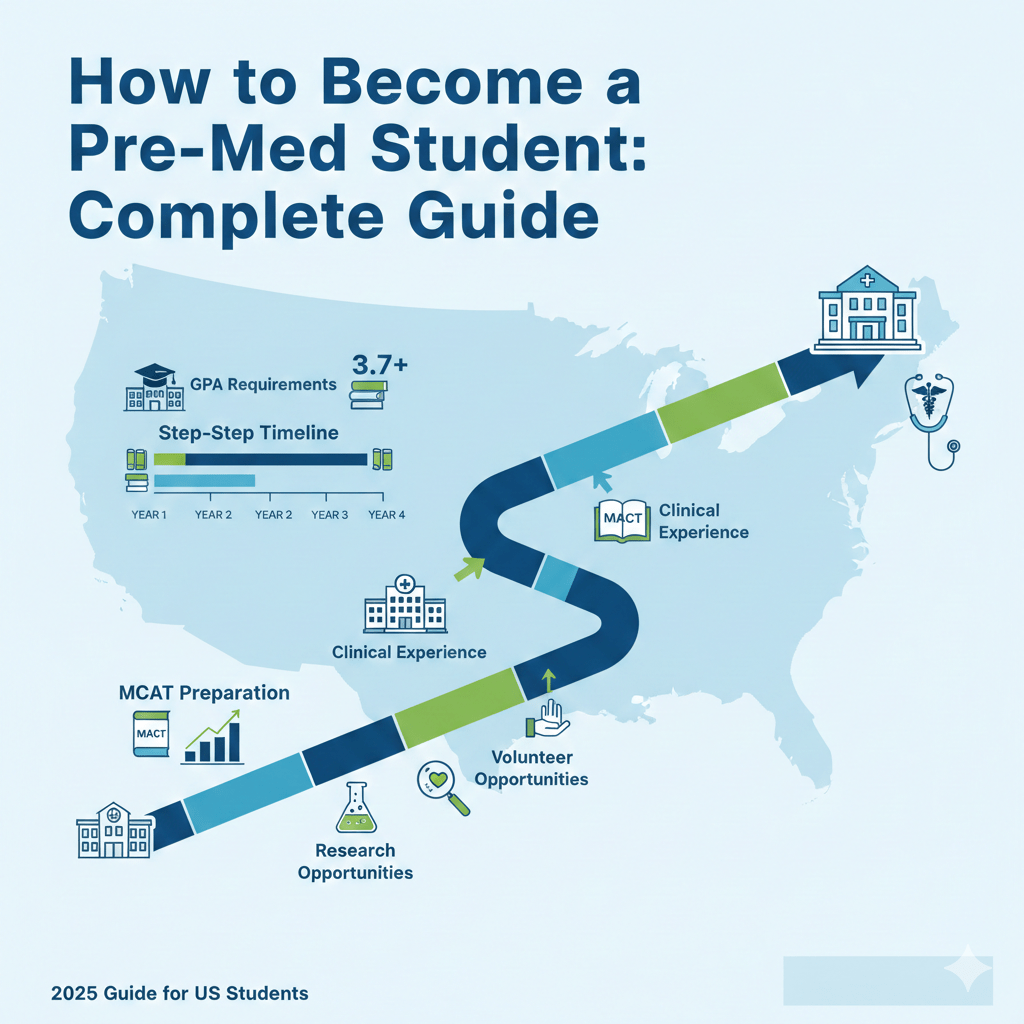
Don't try to cram everything into your first two years. Spreading them out keeps you sane and helps you maintain a strong GPA. A rough timeline most students follow:
| Year | Typical Courses |
|---|---|
| Freshman | General Chemistry, Intro Biology, Calculus |
| Sophomore | Organic Chemistry, Physics, Statistics |
| Junior | Biochemistry, upper-level biology electives, MCAT prep |
| Senior | Electives, application prep, or gap year planning |
This isn't set in stone. Some students start organic chemistry freshman year; others wait until sophomore spring. Do what fits your schedule and doesn't bury you under five hard sciences at once.
Major in Whatever You Want (Seriously)
One of the biggest myths in pre-med: you have to major in biology.
You don't.
According to AAMC data, about half of medical school applicants major in biological sciences. But the acceptance rates tell a more interesting story [Source: AAMC, 2022]:
- Humanities majors: ~48% acceptance rate
- Physical sciences: ~46%
- Biological sciences: ~41%
- Social sciences: ~44%
Humanities and social science majors actually have higher acceptance rates than biology majors. Why? A few reasons. One, they stand out. Admissions committees see thousands of biology majors. An English major who aced organic chemistry and writes beautifully? That's interesting. Two, students who major in something they love tend to earn better grades. A 3.8 GPA in history beats a 3.3 in biology every time.
Plus, if you decide halfway through college that medicine isn't for you, a non-science major gives you more career flexibility.
Pick a major you genuinely enjoy. You'll be more motivated, you'll do better academically, and you'll be a more interesting applicant.
The GPA Game: How High Do You Actually Need to Go?
Let's be real: GPA matters. A lot.
The average GPA for students accepted to medical school hovers around 3.7–3.75 [Source: AAMC]. Science GPA (biology, chemistry, physics, and math courses) is calculated separately, and it usually sits slightly lower, around 3.65–3.71.
Can you get in with a 3.5? Yes, but you'll need a strong MCAT score and compelling extracurriculars. Below 3.5, and you're fighting an uphill battle unless you have a massive upward trend or a graduate degree to offset it.
How to Protect Your GPA Without Losing Your Mind
Start strong. Freshman year grades are easy to tank and hard to recover from. If you mess up first semester and get a 3.0, even straight A's afterward won't fully erase it from your cumulative GPA.
Understand credit hours. A B in a 4-credit organic chemistry course hurts your GPA more than a B in a 1-credit seminar. Prioritize doing well in high-credit classes.
Don't overload. I've seen students try to take five science courses in one semester because they're "behind." They burn out, get mediocre grades, and end up worse off. It's better to take four courses and ace them than take six and struggle.
Use office hours. Seriously. Professors and TAs hold office hours for a reason. Most students don't show up. The ones who do get clarifications, build relationships, and sometimes get the benefit of the doubt on borderline grades.
Tutoring centers exist. Most colleges have free tutoring for intro science courses. Organic chemistry study groups save lives. Don't wait until you're failing to get help.
Pass/Fail can be strategic. Some schools let you take courses pass/fail. Use it for electives or courses outside your major—never for pre-med requirements. Medical schools want to see letter grades for prerequisites.
One underrated factor: grade trends. An upward trend—starting with a 3.2 freshman year and finishing with a 3.9 senior year—looks way better than the reverse. Medical schools want to see resilience and improvement, not someone who coasted freshman year and tanked when things got harder.
Clinical Experience: You Need to Prove You Know What You're Getting Into
Medical schools don't just want students who excel in science. They want students who've actually spent time in healthcare settings and know what they're signing up for.
Because here's the thing: being a doctor is hard. It's emotionally draining, physically exhausting, and full of bureaucracy and frustration. Schools want proof that you've seen the reality—not just the TV version—and still want in.
What Counts as Clinical Experience?
Anything where you're interacting with patients in a healthcare setting:
- Hospital volunteering: Usually the easiest to access. You might transport patients, deliver meals, or sit with families in waiting rooms. It's not glamorous, but it's real.
- Medical scribing: You follow a physician around and document patient encounters in real time. It's a paid position and gives you incredible exposure to clinical decision-making.
- EMT or paramedic certification: Time-intensive, but you're doing hands-on patient care. Some students work part-time as EMTs during college.
- Certified Nursing Assistant (CNA): Direct patient care—bathing, feeding, helping patients move. It's humbling work, and medical schools respect it.
- Clinical research coordinator: If you're working on studies that involve patients, it counts as both research and clinical experience.
Most advisors recommend at least 150–200 hours, but competitive applicants often have 500+. Quality beats quantity, though. Working 10 hours a week for a year shows commitment. Cramming 100 hours into one winter break looks like box-checking.
Document everything. Keep a spreadsheet: dates, hours, responsibilities, meaningful interactions. You'll need this for your medical school application, and trying to reconstruct it two years later is impossible. (Internal link: "How to log clinical hours effectively")
Shadowing: Watching Doctors Do Their Thing
Shadowing is different from clinical experience. You're not interacting with patients—you're just observing a physician at work.
It sounds passive, but it's valuable. You see what a cardiologist's day looks like versus an ER doctor versus a pediatrician. You learn how much time doctors spend on paperwork (spoiler: way more than you'd think). You figure out which specialties interest you and which don't.
How many hours? Aim for 40–100 hours across multiple specialties. Shadow primary care (family medicine, internal medicine), maybe a surgical specialty, emergency medicine, and one or two fields you're curious about.
How Do You Actually Find Shadowing Opportunities?
This trips up a lot of students. You can't just walk into a hospital and ask to shadow someone.
Start with your pre-med advisor. Many schools keep lists of physicians who accept student shadows.
Email physicians directly. Write a professional, concise email explaining who you are, why you're interested in their specialty, and ask if you can observe for a day or two. Follow up with a phone call if you don't hear back.
Use personal connections. Family friends, neighbors, relatives—if someone knows a doctor, ask for an introduction.
Join pre-med clubs. Student organizations often set up group shadowing events.
Keep notes after each shadowing session. What surprised you? What did you learn? What confirmed (or challenged) your interest in medicine? You'll reference this when writing your personal statement.
Research: Not Required, But It Helps
Not all medical schools care about research. If you're applying primarily to community-focused or primary care-oriented schools, clinical experience and volunteering matter more.
But if you're eyeing top-tier research institutions—think Johns Hopkins, Stanford, UCSF—research experience is almost expected.
What kind of research? Doesn't have to be biomedical. I've known students who did public health research, psychology studies, even chemistry or engineering projects. What matters is that you contributed meaningfully—ideally getting your name on a poster, presentation, or publication.
How do you get involved? Email professors whose work interests you. Most research happens during the summer or academic year in university labs. Be prepared to start with grunt work (washing glassware, data entry) and work your way up to more substantive tasks.
If research doesn't excite you, don't force it. A half-hearted research experience won't impress anyone.
Non-Clinical Volunteering and Leadership
Medical schools want well-rounded humans, not just science robots.
Volunteer outside of healthcare. Tutor kids. Work at a food bank. Mentor high schoolers. Join a club and take on a leadership role—treasurer, president, event coordinator, whatever.
These experiences show you care about your community, can work with diverse populations, and have interests beyond medicine. Plus, they give you stories to tell in interviews.
The MCAT: The Test You Can't Ignore
The Medical College Admission Test (MCAT) is a beast. It's a 7.5-hour exam covering biology, chemistry, physics, psychology, sociology, and critical reasoning.
When do you take it? Most students take it spring or early summer of junior year, after finishing most prerequisites. Some wait until after graduation if they're taking a gap year.
How do you study? Plan for 3–6 months of dedicated prep. Most students use a combination of commercial prep courses (Kaplan, Princeton Review) and free resources (Khan Academy, practice exams).
What's a good score? The average for accepted students is around 511–512 out of 528 [Source: AAMC]. Anything above 510 is competitive. Below 500, and you're in trouble unless your GPA is exceptional.
The MCAT is learnable, but it requires serious time and focus. Block out your schedule, take full-length practice exams, and review mistakes obsessively. (Internal link: "MCAT study strategies that actually work")
Should You Take a Gap Year?
More than half of medical school students now take at least one gap year between undergrad and med school.
Why? It gives you time to strengthen your application—boost clinical hours, retake the MCAT if needed, work in a research lab, or just recharge before the intensity of medical school.
Gap years aren't a sign of weakness. They're increasingly common and often make you a stronger applicant.
Frequently Asked Questions
Do I need to major in biology to get into medical school?
Nope. Major in whatever interests you, as long as you complete the prerequisite courses. Non-science majors actually have slightly higher acceptance rates, probably because they stand out and often have strong writing skills.
How many clinical hours do I really need?
There's no magic number, but 150–200 is a decent baseline. Competitive applicants often have 300–500+. What matters more than the total is consistency—working a few hours every week for a year looks better than cramming 100 hours into one summer.
Can I get into medical school with a low GPA?
It's tough, but not impossible. If your GPA is below 3.5, you'll need a strong MCAT score (think 515+), compelling extracurriculars, and a good narrative for why your grades suffered (upward trend, personal hardship, etc.). Some students do post-bacc programs or master's degrees to prove they can handle rigorous coursework.
When should I start preparing for medical school applications?
Start thinking about it freshman year—planning coursework, exploring clinical opportunities, building relationships with professors for recommendation letters. But the actual application process (writing your personal statement, gathering transcripts, requesting letters) happens spring of junior year if you're applying right after graduation.
Final Thoughts: You've Got This (But It's Gonna Be Hard)
Pre-med is not for the faint of heart. It's long hours in the library, brutal exams, early morning hospital shifts, and constant self-doubt. You'll watch friends in other majors breeze through college while you're stress-eating in the organic chemistry study room at 2 a.m.
But if you genuinely want to be a doctor—not because your parents want it, not because it sounds prestigious, but because you can't imagine doing anything else—it's worth it.
Stay organized. Don’t try to do everything at once. If you want a realistic breakdown of what medical schools actually evaluate once you apply, read our complete guide on how to get into medical school. Take care of yourself. And remember: thousands of students navigate this path every year. Some of them are smarter than you. Most aren't. What separates the ones who make it from the ones who don't is persistence, self-awareness, and the ability to keep going even when it's hard.
You've got this.